Society for Industrial Archeology Newsletter, Vo. 51, No. 1 (Winter 2022)
by Andrew Gustafson
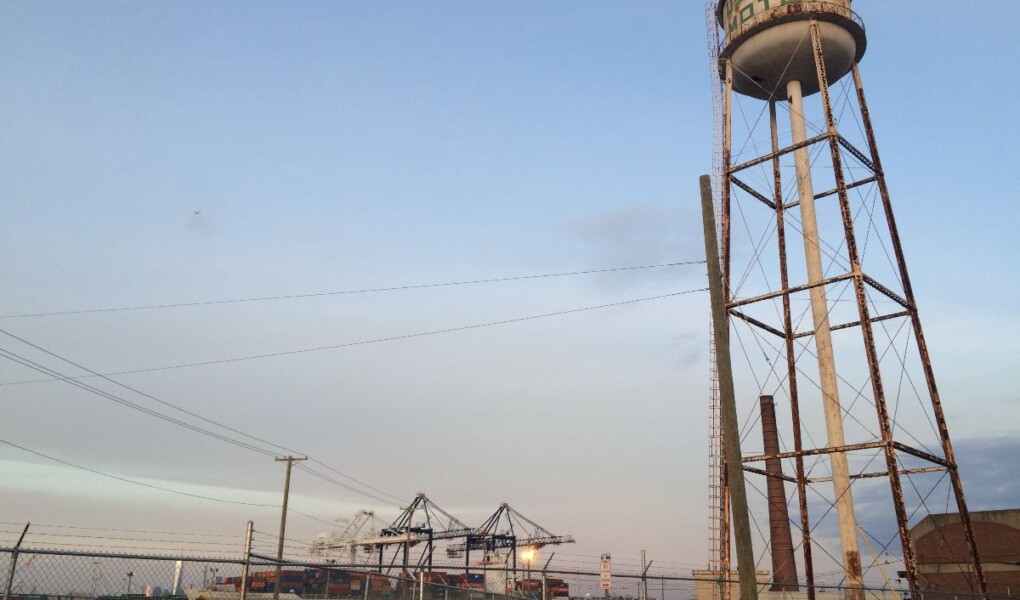
On Aug. 8, 2021, New York Harbor was shaken by an explosion, and 1.5 million sq. ft. of historic structures came tumbling down. The Military Ocean Terminal Bayonne (MOTBY) was originally conceived as a commercial facility, a 440-acre manufactured peninsula for rail and maritime shipping. In 1940, with World War II looming for the U.S., the Navy took it over and completed the project, building the Naval Supply Depot (NSD), Bayonne and an annex to the Brooklyn Navy Yard. This shipyard, with a 1,092-ft. dry dock, would allow for docking of ships that were too large to fit underneath the Brooklyn and Manhattan Bridges, and was used to remove superstructure components (antennae, stacks, etc.) that would allow ships to access the main yard in Brooklyn. In addition to the shipyard facilities, by the end of the war, NSD Bayonne was home to 20 warehouses, five transit sheds, and one cold storage facility, with 3.8 million sq. ft. of covered storage space, making it the Navy’s second-largest supply base on the east coast (after Mechanicsburg, Pa.)